Food Manufacturing
Proposed design, not builtProposed design: an AI security camera monitoring agent targeting 75% lower guard cost and 100% facility coverage at a multinational food manufacturer
Not built. A design for connecting a food production facility's existing 50 to 100 cameras to an AI security platform that would watch every feed 24/7 across five detection capabilities. The targets: around 15 fewer guard positions, 100% camera coverage, and a critical alert in under 10 seconds.
This deployment has not been built. Every figure above is a design target for the proposed system, not a delivered result.
How the system works
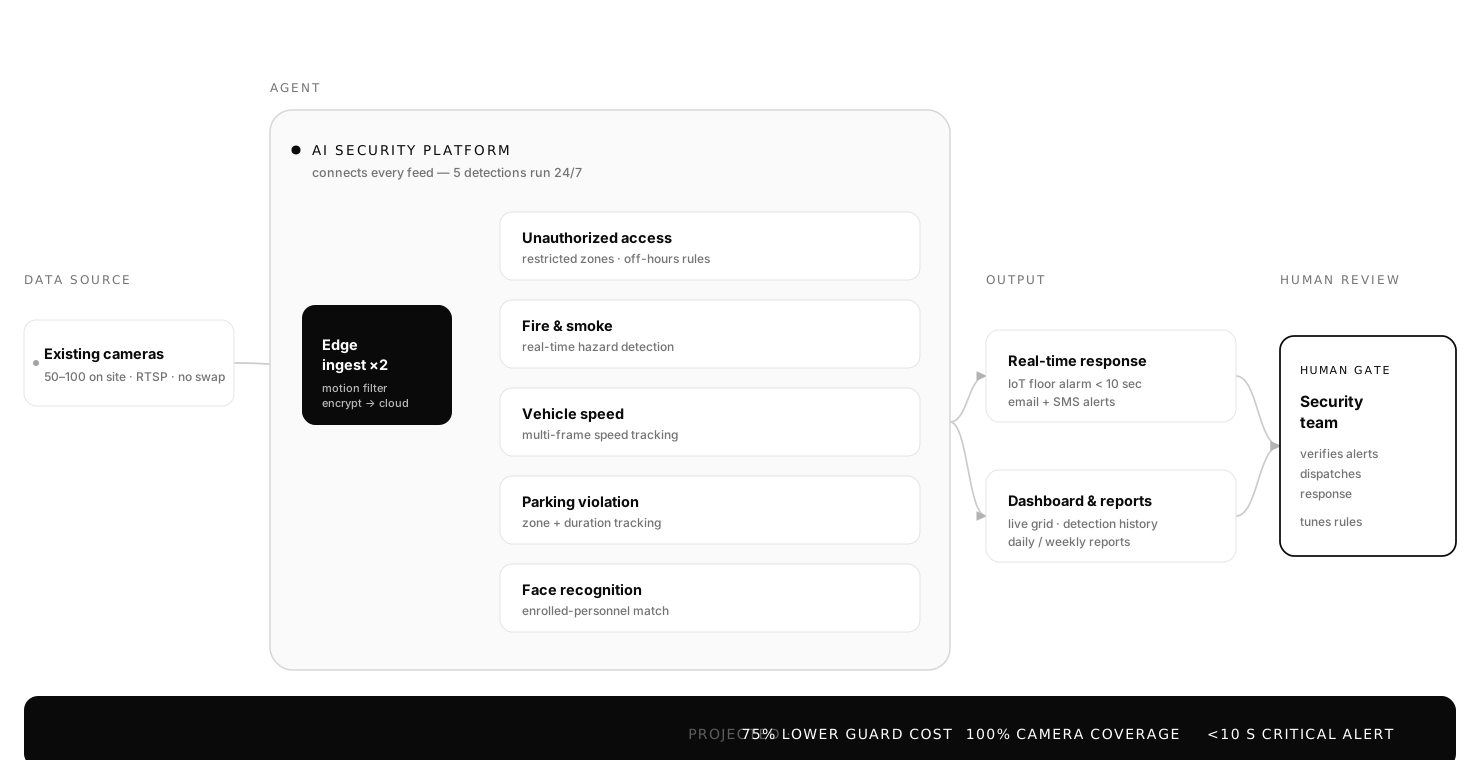
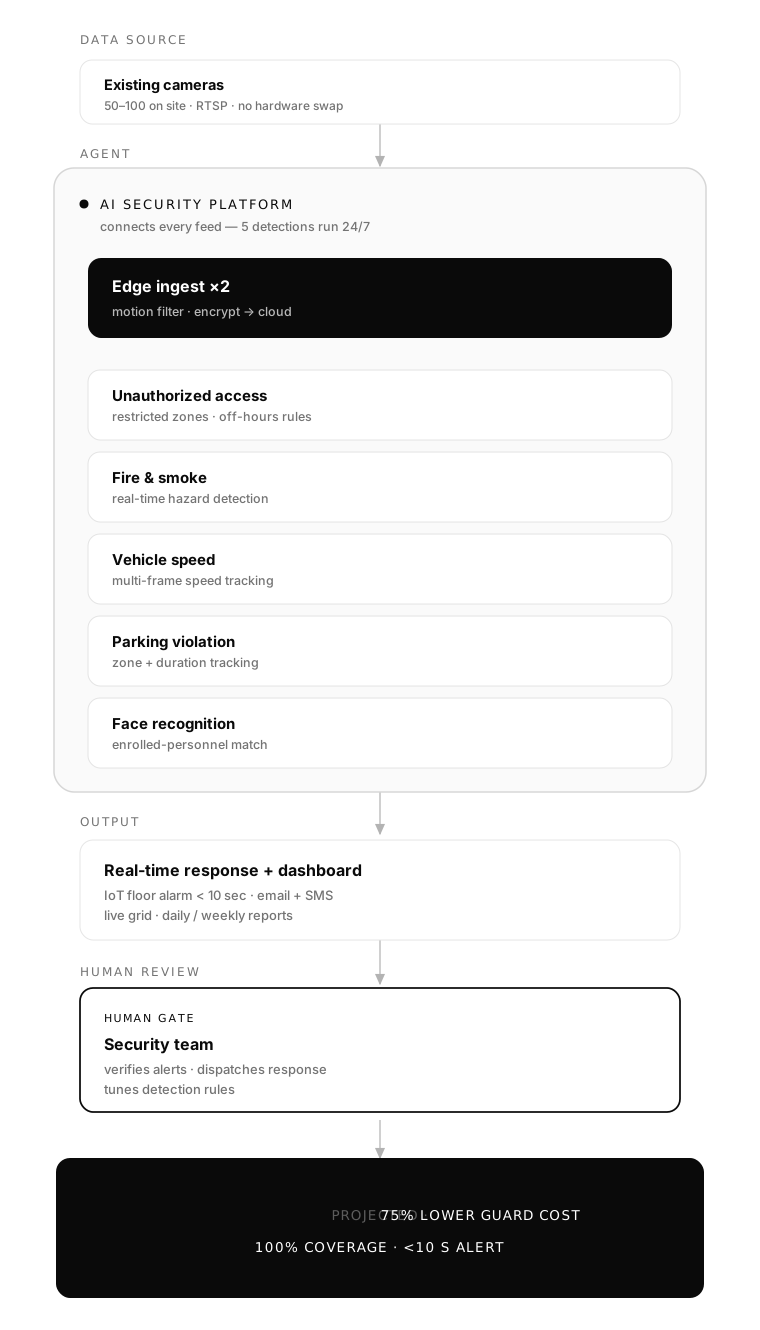
Overview
A large food production facility relies on 20 security guards, roughly 7 per shift, walking patrol beats. This is a proposed design, not a delivered engagement: an AI security platform would connect to the facility's existing 50 to 100 cameras and monitor every feed 24/7. The design targets are 75% fewer guard positions (from 20 to 5 or 6) with 100% camera coverage and a critical alert in under 10 seconds.
The problem
What was capping the business.
A large food production facility relies on 20 security guards, roughly 7 per shift, walking patrol beats across the site. The math is simple: a guard at one gate sees nothing at the opposite loading dock. Shift changes create coverage gaps. Fatigue degrades attention. The result is partial, intermittent coverage of a facility that needs 100% monitoring.
When an incident occurs between patrols, the cameras record it, but nobody sees it until after the fact. The cameras function as a record keeping tool, not a preventive system.
The manufacturer needs to flip their 50 to 100 existing cameras from passive recording to active intelligence, without replacing their camera infrastructure and without disrupting production.
What it would do
What it does.
An AI Security Intelligence Platform connects to existing camera feeds and runs five detection capabilities simultaneously.
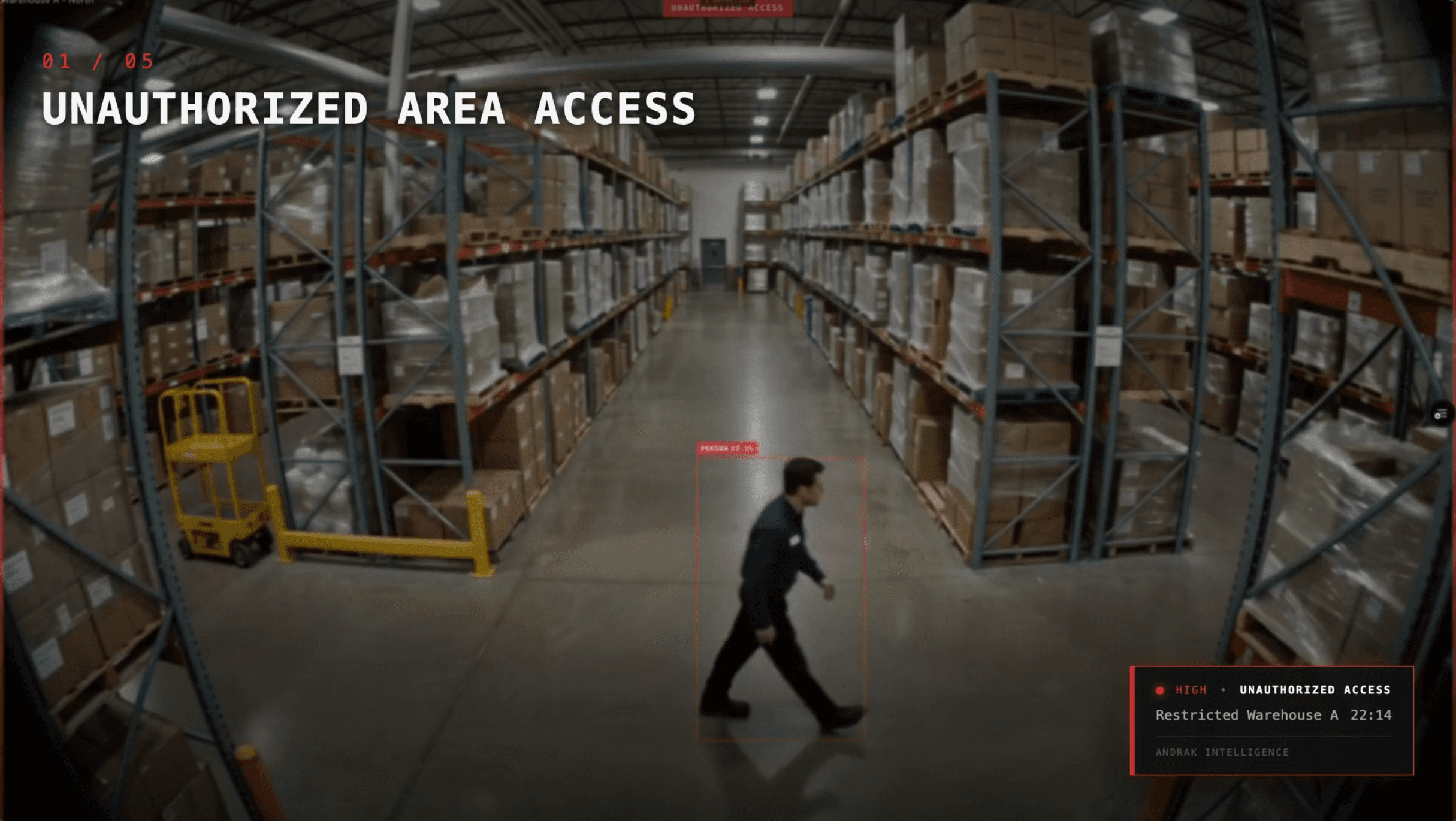
Unauthorized Area Access
Detects personnel in restricted zones and off-hours areas using time-based rules. Instant alerts when occupancy is detected where it should be zero.
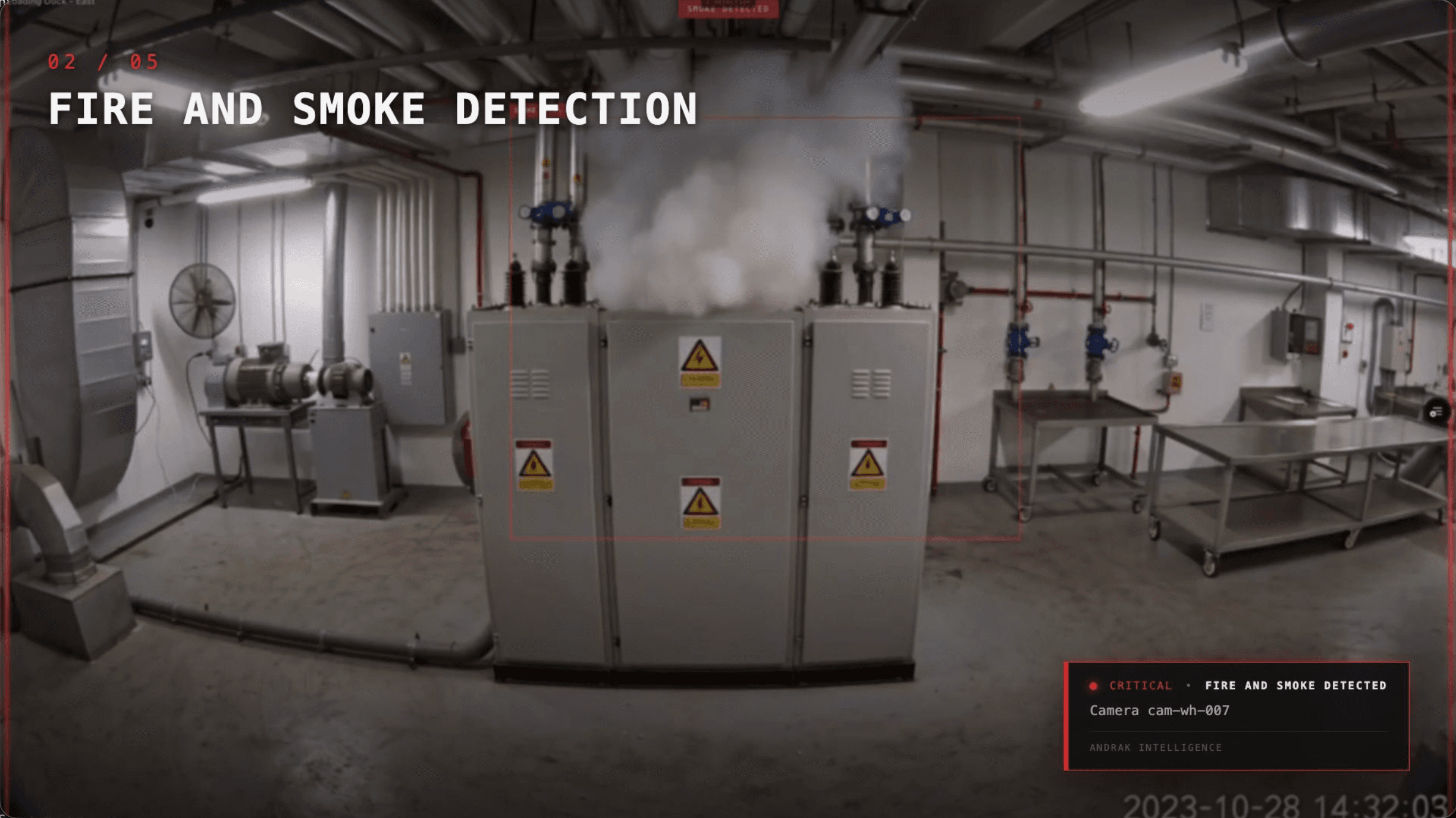
Fire and Smoke Detection
Identifies smoke, fire, and environmental hazards directly from camera feeds in real time. Uses primary detection with secondary analysis for ambiguous scenes.
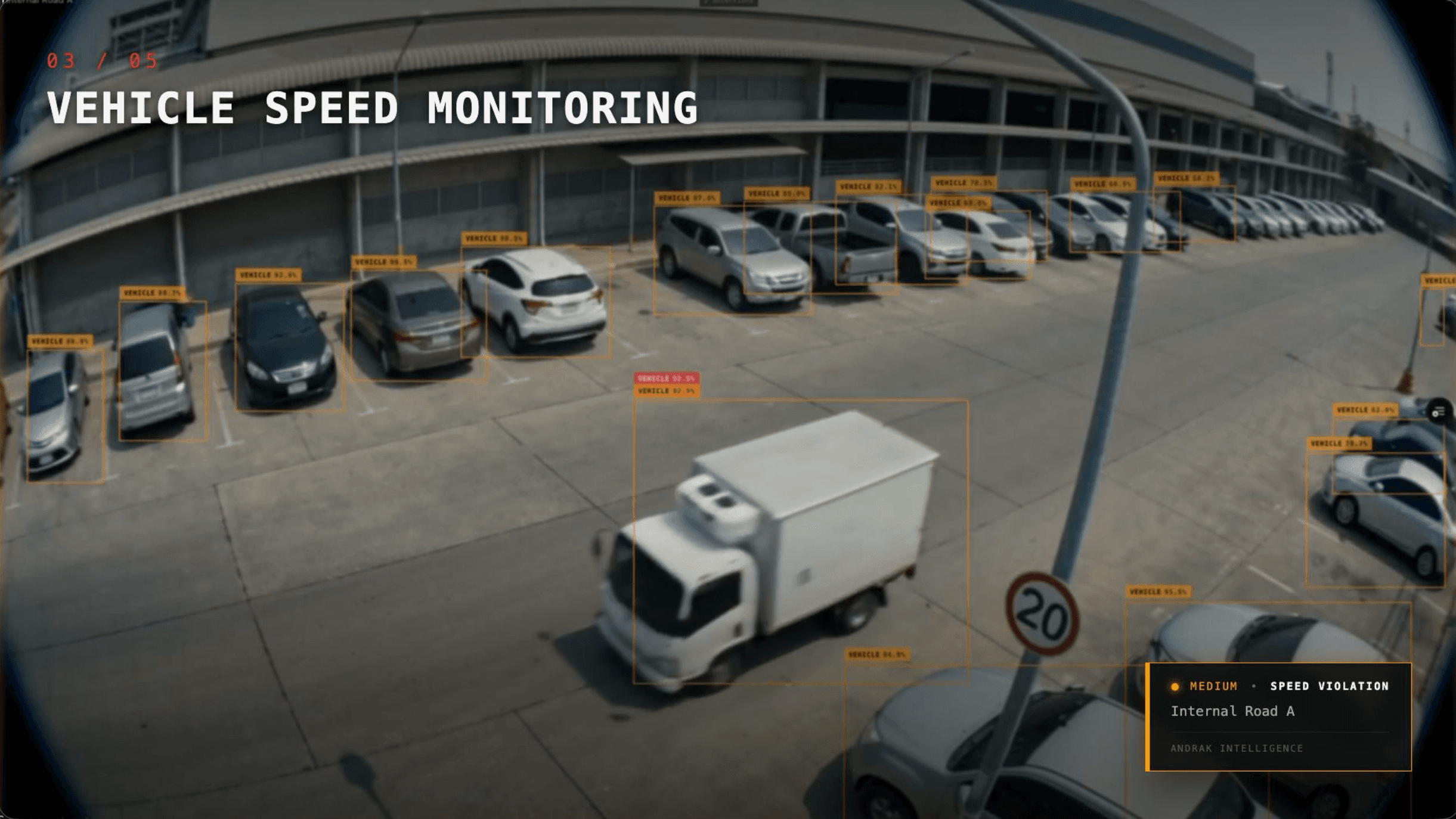
Vehicle Speed Monitoring
Multi-frame tracking calculates vehicle speed and flags every violation against the designated speed limit.
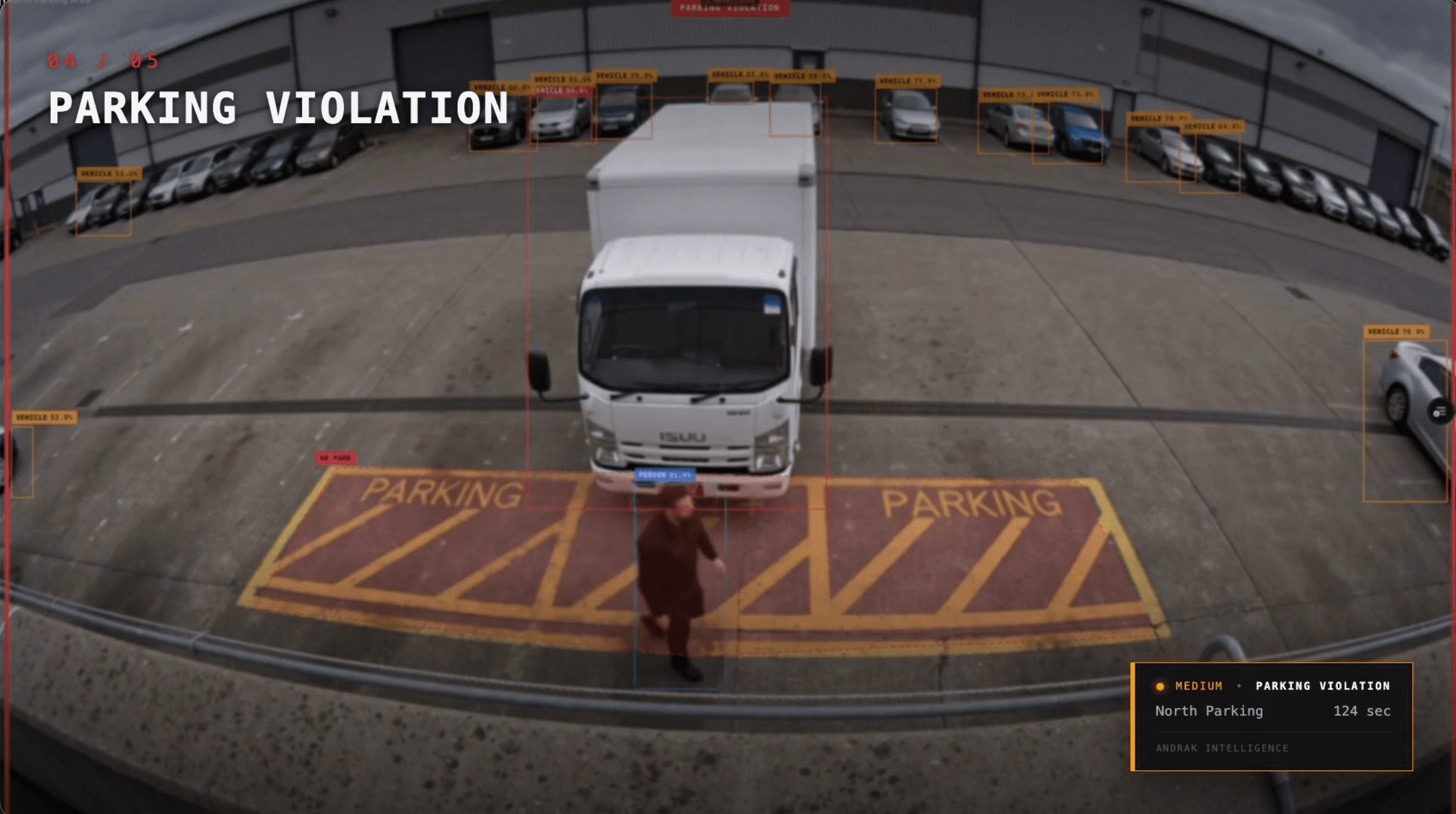
Parking Violation Detection
Monitors designated parking areas using zone polygon overlap with duration tracking to identify persistent violations.
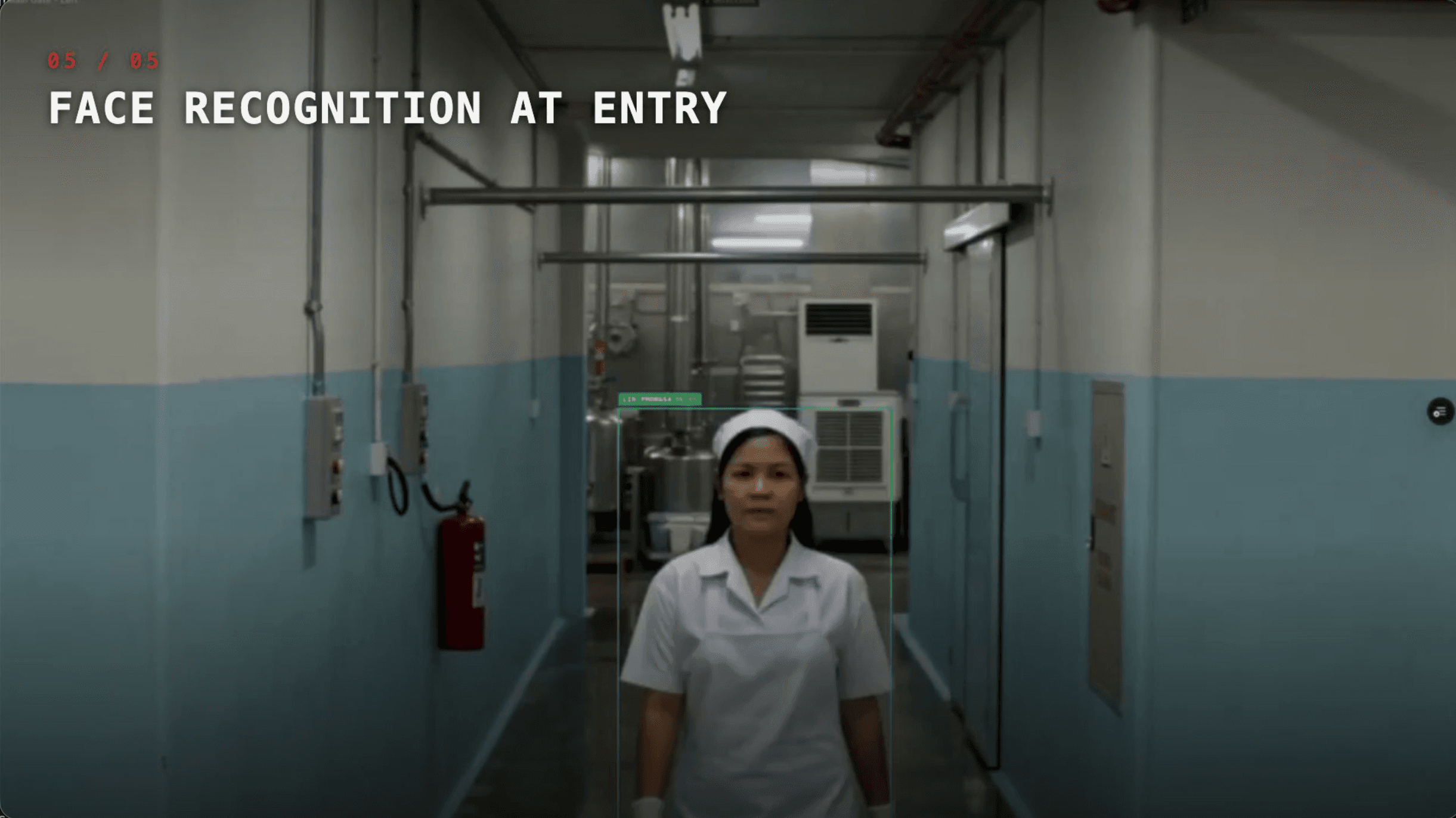
Face Recognition
Verifies authorized personnel at entry points by matching against an enrolled database.
Edge Infrastructure
Two industrial-grade edge gateways are installed on site, connecting to all cameras via RTSP. They extract frames after motion filtering and transmit encrypted image data to the cloud. Local IoT smart alarms positioned across facility zones trigger on critical alerts.
Real-Time Alerting
Critical alerts trigger physical IoT alarms on the factory floor in under 10 seconds, with simultaneous notifications via email and SMS.
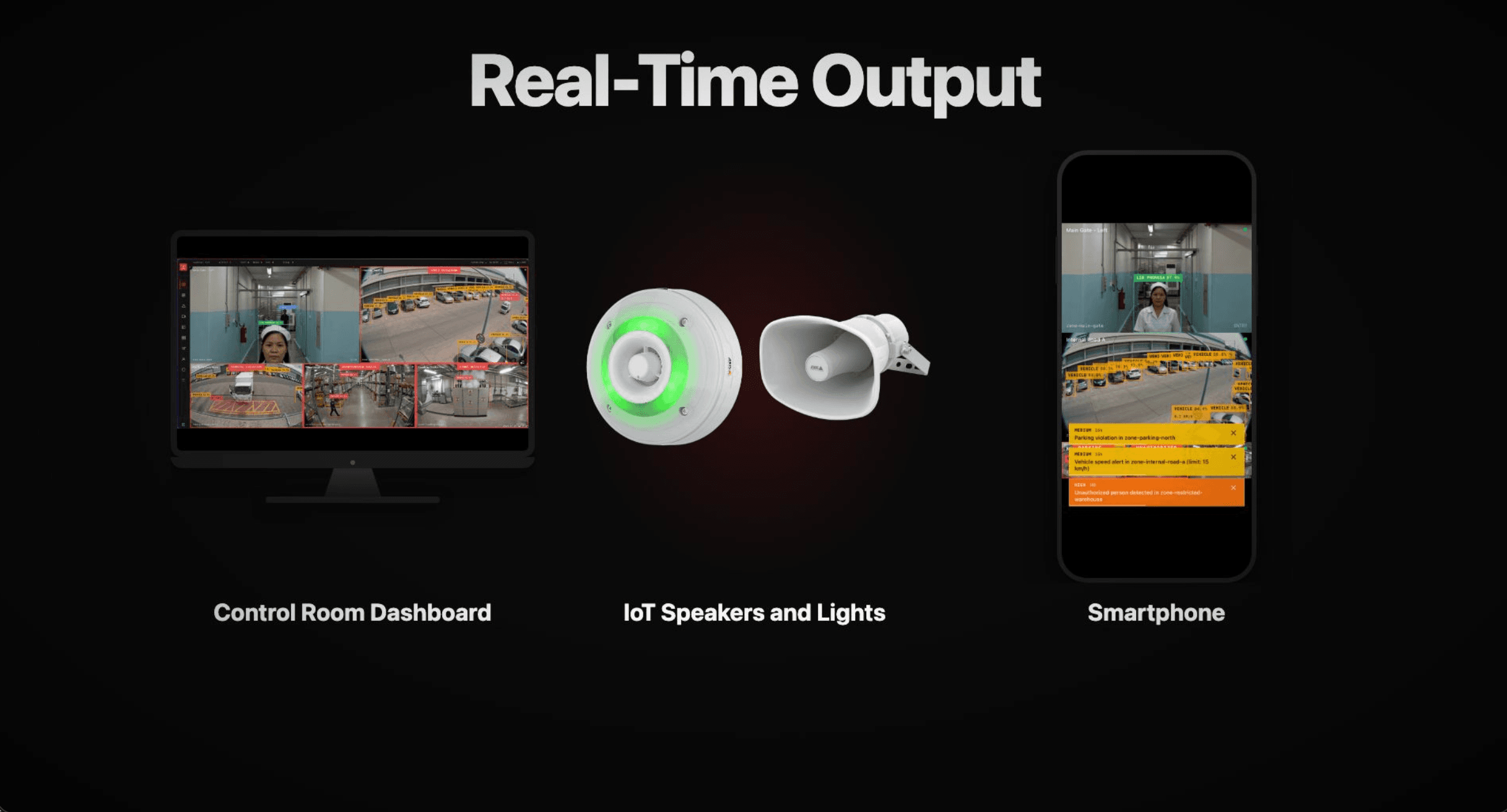
Automated Reporting
Daily and weekly intelligence reports delivered via email. End-of-pilot performance benchmark reporting covers detection accuracy, response times, and system performance.
The security intelligence dashboard shows a live alert feed, camera status grid, and detection history with bounding box visualization.
Results
The projected numbers.
| Metric | Current | Projected |
|---|---|---|
| Security coverage | Partial patrol (guard walking a beat) | 100% camera coverage, 24/7 |
| Guard positions | 20 (7 per shift) | 5 to 6 (2 per shift) |
| Guard cost reduction | Baseline | 75% |
| Cameras monitored | Recorded, not watched | 50 to 100 cameras, real-time AI analysis |
| Alert response time | Minutes to hours (post-incident review) | Under 10 seconds (physical alarm) |
The system transforms cameras from a record keeping tool into a preventive security force. Every camera is watched, every second, by AI that never fatigues, never changes shifts, and never looks away.
Areas of expertise
Explore the building blocks of this engagement.
Departments
Use cases
More results
Other outcomes we've shipped.
What would this look like for your operation?
30 minutes. We map your highest-leverage workflow and give you a written roadmap. Free whether or not we work together.